
A Spur Forever, Seven Years On
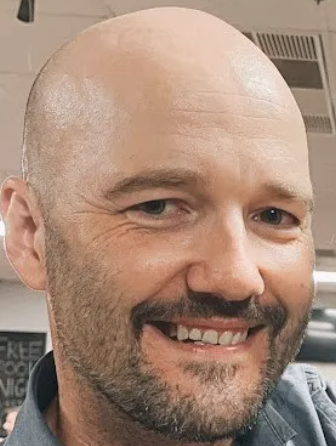
Steve Perryman's autobiography stops in 2019. Tom Mitchell asked him what he'd make of everything since, from the new stadium and VAR to Archie Gray taking his captaincy record.
Steve Perryman’s autobiography, A Spur Forever, came out in 2019, the year Pochettino took us to a Champions League final and was sacked five months later. Since then we’ve had Mourinho, Mason, Nuno, Conte, Stellini, Mason again, Ange, Frank, Tudor and De Zerbi. We’ve won a trophy in Bilbao, said goodbye to Kane, Son and Levy, and spent a season looking over our shoulder at the bottom three. Steve and I work together on his podcast and speak most weeks, so I asked him what he’d put in an extra chapter if he were writing one now.

He set out his terms before we started. The book was about what he’d seen with his own eyes and heard with his own ears, and since 2019 he’s been watching from the outside like the rest of us, so anything he said about the club now would be “guessing, as such”. He wanted to talk about the things he likes rather than the things he doesn’t. He mostly stuck to that, although the modern game gave him one or two things he couldn’t let pass.
He started with the stadium, which he shows people round on the tours. It’s seven years old and still looks brand new, and he gives the credit to the people who planned and built it, Levy and those around him, and to the army of staff who keep it that way. It’s kept so immaculately that he likens it to Hollywood, which is a long way from how he describes the old place. What he doesn’t think it has yet is the history.
“It needs big moments. It’s okay being sat with a better view, comfortable, a light show going on and all that stuff. But actually, it’s about the football. It’s about the pitch and the football, and having memories in a place, like the night of Wolves, the night of Anderlecht.”
Those were the two UEFA Cup finals won at the Lane, in 1972 and 1984. He added the Leeds game in 1975 that kept us up on the last day of the season, the Benfica night in 1962 that people still tell him about, and even the night in 1971 when Arsenal won the first half of their double by beating us. The old ground had been part of all of that.
White Hart Lane, in his words, “was a working-class palace, where you went to work, and the supporters came to watch you go to work. Although it was work, it was for their entertainment. So I suppose we were entertainers, and that’s how football should be looked at. It’s entertainment.”
Pochettino, for Steve, was “absolutely perfect for us”, bearing in mind he had Wembley to cope with and then the move into the new place, and he sees signs of Poch in De Zerbi. The comparison he reached for was the dressing room. Poch had a lot of sorting out to do there when he arrived, and from what Steve has read, the job De Zerbi inherited wasn’t so different. “You can sign a lot of players. You can’t necessarily move players out, because they’ve got an opinion on that as well.” He can see something developing, although he admits he’s “a bit more positive about that than I might have been four games ago”. He also pointed out that he had four managers in his whole Tottenham career, and asked me how many we’d had last season. I had to think carefully before I could give him a confident answer.
Before we spoke he’d reread the last chapter of his book, and found he was already getting fed up with how the game was being run when he wrote it. The new stadium has brought some obvious improvements, he says: the view, everything behind the scenes, and a pitch that “looks very inviting to me, to play on, even with my old bones”, a long way from the sand of his day. Whether the matchday is better is a different argument, and he’d already told me what he thinks the place is still missing. Across the game as a whole, though, he thinks a lot has gone backwards, and VAR is where he started. “There’s all sorts of apologies going on after weekend games. And it does make me wonder, have we improved the officials’ part of this?”
We were more ready for human error back then, he reckons, and more accepting of it. His example was the penalty Wolves were given at Hillsborough in the 1981 FA Cup semi-final, which looked extremely soft and took the tie to a replay. There was a lot of anger, and everyone came up with reasons why a referee could give a decision like that, but in the end it was one man’s mistake, made in the moment. “But in a way, it was trusted.” The replay, four days later at Highbury, is a night plenty of Spurs fans still remember fondly. We won 3-0, two from Crooks and one from Villa, on the way to winning the Cup.
He’s also clear about who the argument used to belong to. People talked about a decision in the pub afterwards, and some of them would watch it again on the television that night, but the people at the game had paid their money and seen what they saw, “without it being repeated a hundred times”. Now the opinions are everywhere, on every channel and in every WhatsApp group, and all of it gets amplified. “I’d rather a live mistake than a thought-through mistake.” That’s a better way of putting it than anything I managed after Leeds, when my question was simply what the threshold is supposed to be for a VAR to send a referee to the monitor. Steve doesn’t have an answer either.
The one word you keep hearing, year after year, whether it’s VAR or the referee on his own, is consistency, “and that’s still lacking”. He gave me the example of goalkeepers getting pulled up lately for taking too long over goal kicks, which is fine, as long as it happens every week. He also wonders whether it’s all getting too fiddly. It used to be A or B, he said. Now it’s A, B, C, D, and A and a half.
Porro’s yellow card in that Leeds game bothered him too. “I can’t see anything wrong with Porro’s tackle. I really can’t. That is football, the old-fashioned football. Head-on, both players going for the ball. Of course there’s contact. But the game must be changing for that to be a yellow card, and it’s not necessarily a change that I like.”
Nor does he like the holding at corners, which he calls “anti-football”. If Porro whipped in a cross from open play and a defender was hugging the forward so he couldn’t run, “that’s obviously a penalty. Why is a corner any different?” I mentioned Van de Ven being dragged down at Chelsea last season, before a corner had even been taken. Steve’s point was that you could end up with two of your players in the box lying on the floor, and then “your percentages must go down”. If you took a poll amongst supporters, he thinks, “and they’re the ones that are paying to watch, they don’t like it. They’d probably like it if they score a goal out of it. But is it good for the game? Not for me.”
Throw-ins take too long as well, and there’s too little movement when they’re taken. With the long throw back in fashion, too often it’s “just get it in, and see what happens”, although he was happy to remind me that Tottenham made hay with it years ago, when Martin Chivers was launching them in. None of this, he says, is about team allegiance. “If you look beyond your team and look at the entertainment value of what you’re watching, there’s some backward movements.”
He says he doesn’t really talk tactics these days, and then explained what he wants when we cross the ball more clearly than most diagrams I’ve seen. Freeze the picture as the cross comes in and draw a line from the ball to the keeper. Someone has to be making a run across that line, or at least trying to. Even if the cross is perfect and we score from a free header at the far post, “we still need to have got someone across that line, to create a hole. As a habit. And I never see it. Never see movement in the box.”
Then we got on to Archie Gray, who took Steve’s youngest-captain record at Brentford in August. He didn’t make it about the record. “If someone is clever enough to be involving Archie in captaincy decisions and leadership, then I think it’s great, because that’s what Bill Nick did with me.” Steve was thrown in as captain at the last minute and then made vice-captain, and he doesn’t think that first game made any difference to the result. But it started him thinking about captaincy, and it showed him how seriously Bill took it. I wrote about what he thinks the job actually is back in August, when nobody knew who De Zerbi would choose.
What he doesn’t recognise now is the captain who runs at the referee as if he’s asking for a card. “That never entered my head. There was too much else to think about as a captain.” It brought him back to an England friendly where the captain’s armband was passed from player to player as the substitutes came on. I remembered it straight away, the one against Serbia and Montenegro in 2003, and for me that was the beginning of the end of caring about England. Steve’s question was a bigger one: who’s leading the leaders? He thinks managers are being led by results, and that agents encourage players to be less loyal and more selfish, “and a leader has to be unselfish.”
Which is how he came to tell me about Oxford. He joined them in March 1986, as his Tottenham career came to an end. They were in danger of going down, and the thinking was that a player with his experience had to help. “And I did help.” That summer the manager, Maurice Evans, “great man”, and the captain sat him down because they wanted him to take the armband. The captain was Malcolm Shotton, who had just lifted the League Cup at Wembley in a final Steve missed because he was cup-tied. Steve said no. “I said, ‘This is really difficult. I don’t love you.’ And that was the wrong choice of word, love. But I don’t know you inside out to be able to lead you, like I was at Tottenham. If you want me to act it, I could.”
Captaincy mattered too much to him to take it on after five minutes, even with the captain himself asking him to. “I know you, but I don’t know you deep enough.”
He’s not a lover of centre forwards as captains, but he made an exception for Kane. “He was such a good influence on the team, that carries a lot of weight. He obviously did love the club, and he did love what they’ve done for him, and he was paying it back in bucketloads.”
Even his last act, as Steve put it, was bringing the club around £100 million. As for Kane and Son, that kind of partnership doesn’t come along once in a lifetime so much as “once in a team time, if you think a team lasts seven or eight years”. It came close to bringing us the European Cup, the one honour even Bill Nicholson never won.
We’d started on what had changed since the book, but the further we went, the more Steve explained the game now through the two managers who shaped him, Bill Nicholson and Keith Burkinshaw. Money was the first example. Bill didn’t have fortunes to spend, Steve said, but when he needed something special he went and got it, and Jimmy Greaves was the ultimate special. Getting him back from Italy took being the best team in England and having enough money to satisfy the seller. The fee was famously £99,999, so that Greaves wouldn’t carry the weight of being the first £100,000 player. “So they say,” Steve said, but he wouldn’t put it past Bill. “A very clever man.”
When I asked whether anything in the book had turned out to be prophetic, he went back to Bill again, who used to say that the downfall of our great game would be the pound note. Steve thinks most supporters would say the same about the extremes of money now. He’s always asking himself whether something is too dear, whether it’s value for money, and whether something cheap is a waste because you’ll be buying it again in six months. “Value for money is what it comes down to. And I think that’s getting further and further away from the reality of what most of us have grown up with. And that’s not jealousy by any means.” He’s “very, very grateful” for what the game gave him. He just thinks it now gives players too much, too soon.
Bill had a view on that as well. The more praise a player gets, he used to say, the less likely he is to keep doing what he was praised for. Steve loved any praise he got, “because I didn’t get very much of it”. His brother, the biggest influence on him growing up, “never told me I was a good player, never told me I was the best player. Just explained the game. What he thought about the game, not necessarily me.” Anyone who signed for Bill in that era and lived off praise wasn’t going to last long. “You just ain’t getting it. And it was like they were preparing you for what’s to come. It’s a tough gig playing in Tottenham’s team.” That’s why he thinks character has to be part of choosing any new signing. You need more than good players.
Bill and Keith were both Yorkshiremen, and both careful with money, the old-school way. The difference was in how they used their players. Bill worked out from his own experience what he wanted and what he didn’t. He used to tell Steve about his constant arguments with Danny Blanchflower, who wanted to drop deep and take the ball off the keeper or the centre-backs. Bill’s answer was that Danny’s job was in the middle of the field. Keith asked the question, listened, went away and thought about it, and sometimes came back. “Bill Nick, I think, lived off his own experience. Keith lived off the good players that he assembled, having their opinion. Not always going with it, of course not. But he could be led as well as lead.” With Ossie, Glenn, Ray Clemence when he came, and Steve himself as an experienced captain, Keith’s players had earned the right to be listened to. Steve compared it to a good company today, where a good worker has more chance to air his views than he would have had back in the day.
Bill didn’t only tell you what to do, he proved it. He’d line the players up level with the goal line, cross a ball in for Pat Jennings to catch, and make them sprint until Pat’s long kick bounced and the whistle went. Some had covered 30 metres, some 28. That, Bill would say, is how far you can get while the ball’s in the air, so there’s no excuse for their centre-back getting a free header with you nowhere near him. Pat might be aiming at Chivers, but anyone who’d made the ground could get to it. “Bill didn’t like free headers from their defenders. Didn’t like it.”
Steve’s career took him a long way from Tottenham, and he thinks that’s what made the book interesting to write. He learned from the very best, and sometimes by playing against them: Liverpool at Anfield, United at Old Trafford, the San Siro, and Real Madrid, where he got himself sent off at the Bernabeu, “stupidly”, as he puts it. He worked in Japan, and when he recently put out a photo of his book with Mount Fuji in the background, people loved it. But the part he calls the biggest eye-opener was “16 years down at Exeter, with a club that was on its knees, absolutely on its knees”. It let him do what he most wanted to do, which is help players develop, whatever level they’re at. Ollie Watkins came through there, and so did two current Premier League captains, Matt Grimes at Coventry and Ethan Ampadu at Leeds. “That’s not luck. I think I’m someone who is able to pass on what I’ve learned, and I’ve learned from the very best.”
Barry Daines, who spent most of the 1970s as Pat Jennings’ understudy, died on 7 November, and Steve finished on him. People call Steve loyal, he said, and he understands why. “You stay 19 years in one place, of course you’re loyal. But for me, Barry Daines was ten times more loyal than me, because I was in that team at 17 and stayed in. What have I got to be disloyal about?” Barry would come in for a game or two when Pat was injured and go straight back out when Pat was fit, with no doubt about which way it would go. “He was keeping the place warm. That is loyal. He didn’t create a fuss and demand a move.”
Tom Mitchell is a lifelong fan, season ticket holder and writer of https://stillthelane.co.uk/


