
The Real Test for De Zerbi at Tottenham: Can He Get Them to Buy In?

Tottenham have spent more than £300 million this summer. Sandro Tonali, Sávio, Omar Marmoush, Mateus Fernandes and Jan Paul van Hecke are among the major additions. That spending does not guarantee success. It does change the debate around Roberto De Zerbi. Spurs have enough talent for the main question to be about the team, not the shopping list. [1].
De Zerbi's football asks players to move and think as a group. The next pass depends on where teammates move. The press also depends on several players reading the same cue at almost the same time. One player can understand the plan and still arrive a second late. Eleven good players can know their jobs and still look disconnected.
My recent paper, Time to Automaticity in Team Performance Systems, looks at the delay between learning a team system and playing it with stable group timing. Early results can contain learning noise while players build shared habits. Research on team thinking also shows that teammates learn common patterns through repeated work. Those patterns help them predict what a teammate will do next. [2, 3, 4, 5]
My reading is that De Zerbi's man management is part of the football problem at Tottenham. The squad has to stay with the same ideas long enough for those habits to form. His record suggests he can create strong buy-in. It also shows that conflict can become a problem when players clash with him.
Kompany's Burnley Shows What Clicking Looks Like
Vincent Kompany's first Burnley season is a useful example of a team learning a new way to play. Burnley had spent years under Sean Dyche. Kompany changed the squad and the style. They won only one of their first five Championship matches. The Premier League later described a new squad slowly adapting to a fresh way of playing. [6]
Then the team took off. Burnley won ten league matches in a row, won the Championship and finished with 101 points. The first five results had not shown the level they would reach once the new patterns became familiar. [6, 7]
Their Premier League relegation the next year does not erase that lesson. It sets a limit on it. Burnley had gone from a side strong enough to control most Championship matches to an underdog facing faster and more skilled teams. Before the season, Premier League analysis warned that Kompany's possession game was easier to play from a position of strength. Once the season began, the same outlet found that his aggressive setup left large gaps for stronger teams to attack. [8, 9]
By then, Burnley were no longer a team that looked unsure of Kompany's ideas. The harder issue was whether that football, with that squad, worked against better teams. They were no longer the most skilled side most weeks. That is why Burnley is a learning example, not a direct Spurs comparison.
Tottenham are in a different spot. They are not a promoted side trying to play like the strongest team in the Championship. Spurs already have a squad with high Premier League quality. Their problem is getting that quality to work together.
Villa Is the Closer Comparison
Aston Villa offer a closer example. They took only three points from their first five Premier League matches in 2025 to 2026. By December, Villa had won seven league matches in a row. They were third with 36 points from 17 games. [10, 11]
Villa later finished fourth and won the Europa League. The players did not become talented in December. The quality was already there. The team began turning that quality into results at a much higher rate. [12, 13]
That does not mean Tottenham will follow the same path. It shows why a poor opening month can give a false picture of a good squad. A turn can arrive fast once confidence, roles and timing start to line up.
De Zerbi has his own example from Brighton. Lewis Dunk said the first weeks under him were "baffling" and called the training change a hard transition. Dunk also said Brighton worked on the movements every day. In time, players knew the positions, timing and angles around them. [14]
That account fits Time to Automaticity well. Confusion came first. Repeated work then made the movements easier to read and repeat. The open question at Spurs is whether De Zerbi can keep a bigger and more expensive squad with him through that hard stage.
Enjoy this kind of Spurs writing?
The White Hart Review is free for all Spurs fans. Original writing on Spurs, delivered twice a week. No ads. Less reaction. More reflection.
The Man Management Record Is Mixed
Brighton gives De Zerbi a strong case. Danny Welbeck praised his effect on the dressing room, his charisma and his passion. He called De Zerbi "unbelievable with the lads." Dunk's account also shows a group that stayed with a confusing teaching process until it made sense. [14, 15]
Marseille gives the other side. De Zerbi led the club to second place in Ligue 1 in his first season, so the spell was not a simple failure. The same season included several flare-ups. A club film showed a training clash with Ismaël Koné. There were also threats of resignation and the Chancel Mbemba dispute. [16]
The next season brought more strain. Adrien Rabiot and Jonathan Rowe fought after a defeat, and De Zerbi backed Marseille's choice to remove both players from the squad. De Zerbi and Marseille then parted by mutual consent in February 2026 after a 5-0 loss to Paris Saint-Germain and a Champions League exit. [17, 18]
The fight was not De Zerbi's doing, and the record does not prove that he lost the dressing room. For me, it leaves a mixed picture. He can build strong loyalty with players who accept his demands. His style also gets harder to carry when conflict grows.
Mykhailo Mudryk is the clearest example of the first side. After joining Tottenham, he called De Zerbi his "football father." That kind of bond matters. De Zerbi asks players to trust detailed ideas that can feel strange before they become natural. [19]
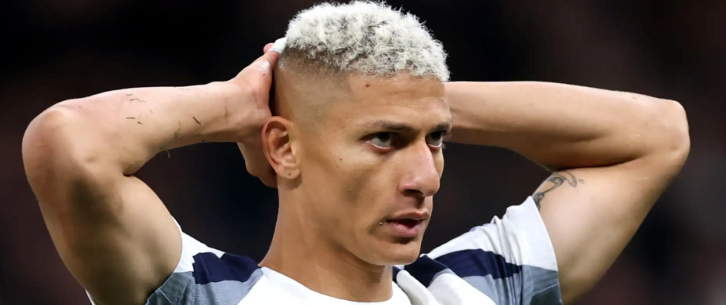
At Spurs, the human side now sits next to the tactical side. De Zerbi has said his biggest problem is finding the "right mentality" and has stressed unity while the squad changes. Richarlison repeatedly asked to leave during the summer. That gives De Zerbi another test of how he handles a player who has asked to go. [20, 21]
What the Next Two Months Tell Us
The 3-0 loss at Brentford showed how early Tottenham are in this process. Four new signings started, and Mateus Fernandes became a fifth new arrival used after halftime. De Zerbi said, "we are not a team yet." He also linked the problems to fitness, late World Cup returns and the work of building a new project. [22, 23]
The 2-0 loss to Newcastle was still a bad result, but the performance gave a different signal. Spurs had 17 shots to Newcastle's 11. Newcastle scored with its only two shots on target. De Zerbi also spoke after the game about better links between players and better spacing between the lines. [24, 25]
One better performance proves little. The useful test is whether it repeats. Passing routes have to become easier to see. Players have to react together after losing the ball. The spaces between the lines have to settle from week to week.
My working estimate is that the first strong signs of a turn would make sense from mid-October into early November. That is my reading of this Spurs squad through Time to Automaticity. It is not a fixed result from the paper. The paper rejects one set number of weeks or matches because the learning rate changes with the squad, the system, past experience and training time. [2]
By November, Spurs do not have to look finished. They do have to look more connected. By December, if the same basic problems in timing, spacing and group play remain with little change, learning becomes a weaker answer and the results carry more weight.
De Zerbi has shown that he can teach this kind of football. Brighton is strong evidence of that. Tottenham will tell us more about the other part of management: whether he can build enough trust across a deep and expensive squad for the football to become shared rather than instructed.
Kompany's Burnley shows how a new system can look ordinary before it clicks. Aston Villa shows how fast a strong Premier League side can change once its parts begin working together. Marseille shows the risk when De Zerbi's intensity meets conflict. Spurs have given him the players. Now his biggest job is getting them to become a team.
Waydell D. Carvalho is a researcher and systems analyst focused on sports governance and performance. He is a performance analyst for Cwmbran Celtic in the Welsh Ardal South East League. He is also the author of American Soccer Cartel: The System Rigged America’s World Cup Chances and creator of Director of Management: Football Club (DOMFC), a football management game on Steam.
References
Reuters. "Big-spending Tottenham hand De Zerbi the tools to dream." August 28, 2026.
Carvalho WD. Time to Automaticity in Team Performance Systems: Learning Latency, Evaluation Validity, and Decision Timing in Elite Football. Unpublished manuscript. 2026.
Eccles DW, Tenenbaum G. "Why an expert team is more than a team of experts: a social-cognitive conceptualization of team coordination and communication in sport." Journal of Sport and Exercise Psychology. 2004;26(4):542 to 560. DOI: 10.1123/jsep.26.4.542.
Mohammed S, Ferzandi L, Hamilton K. "Metaphor no more: a 15-year review of the team mental model construct." Journal of Management. 2010;36(4):876 to 910. DOI: 10.1177/0149206309356804.
Gershgoren L, Filho EM, Tenenbaum G, Schinke RJ. "Coaching shared mental models in soccer: a longitudinal case study." Journal of Clinical Sport Psychology. 2013;7(4):293 to 312. DOI: 10.1123/jcsp.7.4.293.
Premier League. "How Kompany revolution got Burnley promotion." April 9, 2023.
Premier League. "Vincent Kompany." Manager profile.
Premier League. "Premier League 2023/24 club previews: Burnley." August 9, 2023.
Premier League. "How promoted sides can recover from early struggles." September 6, 2023.
The Guardian. "Wretched start to six wins in a row: how Aston Villa turned their season around." December 5, 2025.
Reuters. "Superb Rogers double gives Aston Villa 2-1 win over Man United." December 21, 2025.
Reuters. "Chelsea sign goalkeeper Martinez from Villa on three-year deal." August 30, 2026.
UEFA. "2025/26 Europa League: Meet the winners." May 20, 2026.
The Guardian. "'Big change in mentality': Lewis Dunk back in England fold after five years." September 6, 2023.
ESPN. "Passion, honesty and dreaming big: How Roberto De Zerbi took Brighton into the Europa League." May 25, 2023.
The Guardian. "Marseille try to put Rabiot punch-up behind them while PSG win ugly." August 25, 2025.
Reuters. "Marseille dressing room brawl like 'English pub fight', says De Zerbi." August 22, 2025.
Reuters. "Marseille part ways with coach De Zerbi." February 11, 2026.
The Guardian. "'A great feeling': Mykhailo Mudryk seals loan move from Chelsea to Tottenham." September 1, 2026.
The Guardian. "Biggest problem for Spurs is finding 'right mentality', says Roberto De Zerbi." August 29, 2026.
The Guardian. "Richarlison could still leave Tottenham as Trabzonspor weigh up bid for striker." September 2, 2026.
Tottenham Hotspur. "Brentford 3-0 Spurs | Roberto De Zerbi's verdict." August 22, 2026.
Tottenham Hotspur. "Brentford 3-0 Spurs | Every word of Roberto De Zerbi's post-match press conference." August 23, 2026.
Tottenham Hotspur. "Spurs 0-2 Newcastle | Roberto De Zerbi's verdict." August 29, 2026.
Tottenham Hotspur. "Spurs 0-2 Newcastle | Every word of Roberto De Zerbi's post-match press conference." August 29, 2026.


Comments